Pan-India Network • 120+ Cities • Certified Specialists

Stroke Physiotherapy & Hemiplegia Clinic in India

Stroke Rehabilitation Physiotherapy at CurePrabha Clinics

Looking for the best stroke rehabilitation clinic in India?

Comprehensive clinical neuro-physiotherapy dedicated to restoring movement, balance, and daily independence following ischemic or hemorrhagic stroke. Our certified neuro-physiotherapists utilize the Bobath concept, task-specific motor relearning, and gait re-education across 120+ cities in India.

Caregiver 1 Caregiver 2 Caregiver 3
120+ Cities • 15,000+ Recoveries • 4.9/5
Trusted Care

Expert recovery. Lasting mobility.

100% In-Clinic Care
5.0
15,000+ Recoveries Trusted Care

Bobath Concept & Neurodevelopmental Care

Normalizing muscle tone and guiding normal movement patterns rather than allowing abnormal compensatory reflexes.

Task-Specific Motor Relearning (MRP)

High-repetition, real-world functional tasks (reaching for a cup, stepping over obstacles) driving synaptic neuroplasticity.

Functional Electrical Stimulation (FES)

Targeted neuromuscular stimulation to activate dorsiflexors during walking and open spastic fingers during grasping.

Mirror Therapy & Mental Imagery

Stimulating mirror neurons in the motor cortex to accelerate upper extremity functional recovery and sensory feedback.

Every patient deserves a care team that shows up — consistently, kindly, and with clinical expertise. Our certified physiotherapists guide progress in pain management, strength building, and range of motion.

Condition-specific guidance

How this clinical care pathway works

Assessment, symptom drivers and recovery direction in one clear clinical view.

Clinical scope

Stroke Rehabilitation Physiotherapy care identifies the movement, strength and mobility limits affecting daily life. Certified CurePrabha physiotherapists provide focused in-clinic rehabilitation across 120+ cities.

Why symptoms persist

Pain often persists when weakness, stiffness and compensatory movement reinforce one another. A focused clinical assessment identifies the main physical drivers before treatment begins.

Treatment direction

Hands-on therapy, guided exercise and progressive loading restore comfortable movement. Care advances from symptom control to safer activity, stronger function and measurable recovery.
DIAGNOSTIC SCOPE

Conditions We Successfully Treat

Doctor-led, evidence-based in-clinic physical therapy tailored to Stroke Rehabilitation Physiotherapy across 120+ cities.

Hemiparesis & One-Sided Weakness

Facilitating active motor recruitment, tone inhibition, and bilateral cortical reorganization for the affected arm and leg.

Post-Stroke Gait & Walking Re-education

Overcoming circumduction and foot-drop gait using harness body-weight support, sensory cues, and functional electrical stimulation.

Upper Limb & Hand Motor Recovery

Constraint-Induced Movement Therapy (CIMT), mirror therapy, and grasp-release training to restore daily self-care tasks.

Spasticity & Hypertonia Management

Sustained physiological stretching, tone-reducing positioning, and antagonist muscle activation to prevent joint contractures.

Trunk Control & Postural Balance

Pelvic bridging, seated lateral weight-shifting, and core stability to prevent falls and enable unassisted sit-to-stand transitions.

Painful Hemiplegic Shoulder Subluxation

Gentle scapular realignment, supportive taping, and supraspinatus electrical stimulation to prevent painful shoulder dislocation.

CLINICAL PRECISION

Comprehensive Evaluation & Assessment

Standardized diagnostic testing and movement screens tailored to Stroke Rehabilitation Physiotherapy.

01

Fugl-Meyer Motor Assessment (FMA)

Evaluating isolated joint reflexes, volitional movement synergies, and sensory-motor coordination in upper and lower extremities.

02

Modified Ashworth Scale (MAS) for Spasticity

Grading muscular resistance to passive stretch (0 to 4) across elbow flexors, wrist flexors, hamstrings, and calf muscles.

03

Berg Balance Scale (BBS) & Postural Screen

Assessing 14 balance tasks ranging from sitting unsupported to standing on one leg to evaluate fall risk.

04

Functional Independence Measure (FIM) & Gait

Determining levels of physical assistance needed for transfers, bed mobility, wheelchair navigation, and ambulatory velocity.

OUR ADVANTAGES

Why Families Choose CurePrabha

We are committed to delivering hospital-grade clinical therapy across our pan-India network of modern clinics.

CLINICAL EXCELLENCE

Clinical
Excellence

Certified neuro-physiotherapists experienced in evidence-based Bobath, MRP, and motor recovery across 120+ Indian cities.

TAILORED CARE

Customized
Protocols

Condition-specific neuro-rehabilitation matched to the patient's exact stroke type, cognitive status, and mobility baseline.

MEASURABLE RECOVERY

Proven
Results

Standardized Fugl-Meyer, Berg Balance, and functional walking scores tracked every month to document neuroplastic gains.

CLINICAL JOURNEY

How It Works

A simple, transparent 4-step path to starting your in-clinic therapy.

1

Phase 1: Flaccidity & Bed Mobility

Passive range of motion, anti-spasticity bed positioning, bridging, rolling, and unassisted sitting balance to prevent bedsores and contractures.

2

Phase 2: Spasticity Control & Sit-to-Stand

Tone-inhibiting exercises, symmetrical weight-bearing through the affected foot, pelvic control, and active sit-to-stand transitions.

3

Phase 3: Ambulatory Gait & Arm Recovery

Parallel bar gait training, body-weight supported walking, CIMT arm grasping exercises, and functional electrical stimulation.

4

Phase 4: Community Mobility & Independence

Navigating stairs, uneven outdoor surfaces, dual-task balance challenges, and fine motor domestic self-reliance.

Phase 1: Flaccidity & Bed Mobility

Step 1 of 4

Passive range of motion, anti-spasticity bed positioning, bridging, rolling, and unassisted sitting balance to prevent bedsores and contractures.

Tap steps above to explore flow
TARGET POPULATION

Who Benefits Most

Patients and recovery candidates ideal for our specialized Stroke Rehabilitation Physiotherapy program.

Recent Post-Stroke In-Clinic Patients

Individuals medically discharged from the hospital seeking intensive neuro-physiotherapy during the vital golden window of recovery.

Patients Struggling with Walking (Foot Drop)

Those dragging or swinging their leg outwards (circumduction gait) due to weak ankle dorsiflexion and knee hyperextension.

Patients with a Stiff, Clenched Hand or Arm

Individuals experiencing painful spastic curling of the fingers, tight elbow flexion, or shoulder subluxation.

Chronic Stroke Survivors Seeking Gains

Individuals months or years post-stroke wanting to break through mobility plateaus and regain meaningful daily activities.

Heartwarming success

Loved by Families

Patient-centered recovery, therapist-guided exercises, and home sessions designed around your real goals.

Therapy that feels personal, steady, and close to family life.

Clinics-friendly schedule

Simple home tasks that continue progress between sessions.

Verified physiotherapists

Licensed, background-verified specialists in neurological, orthopaedic, and sports clinical care.

“

CurePrabha has been a blessing. After my father's stroke, we booked neurological clinical care in-clinic. The physiotherapist was patient, skilled, and helped him walk again.

Ramesh Kumar
Ramesh Kumar
Post-Stroke Recovery · Google Review
“

The post-operative physiotherapy in-clinic made all the difference. I was comfortable in my room, and the progress in my knee mobility has been absolutely remarkable.

Meera Sen
Meera Sen
Knee Replacement Recovery · Google Review
“

Highly professional orthopaedic physiotherapists. The home session was well-planned, using advanced portable equipment. I saw a huge drop in back pain within weeks.

RV
Rajesh V.
Back Pain Relief · Google Review
“

We booked sports physiotherapy in-clinic for my daughter's ligament tear. The strength conditioning and recovery protocols were highly effective.

DM
Deepa M.
Sports Injury Physiotherapy · Google Review
Pan-India physiotherapy network

Physiotherapy care across India, closer to home.

Doctor-led in-clinic physiotherapy for Stroke Rehabilitation Physiotherapy—delivered by specialist teams closer to your city.

120+
Cities covered
18
Care pathways
15K+
Recoveries
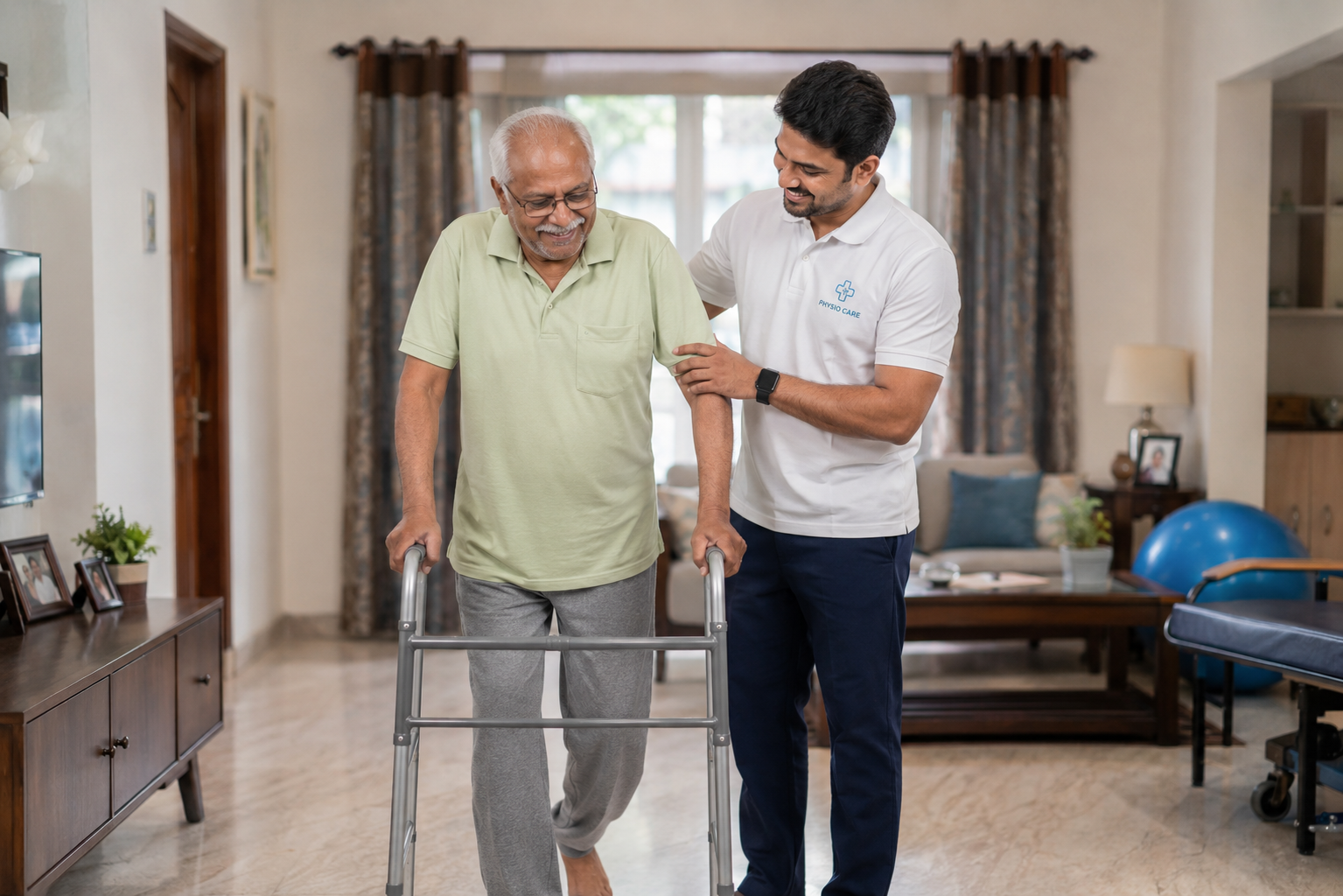
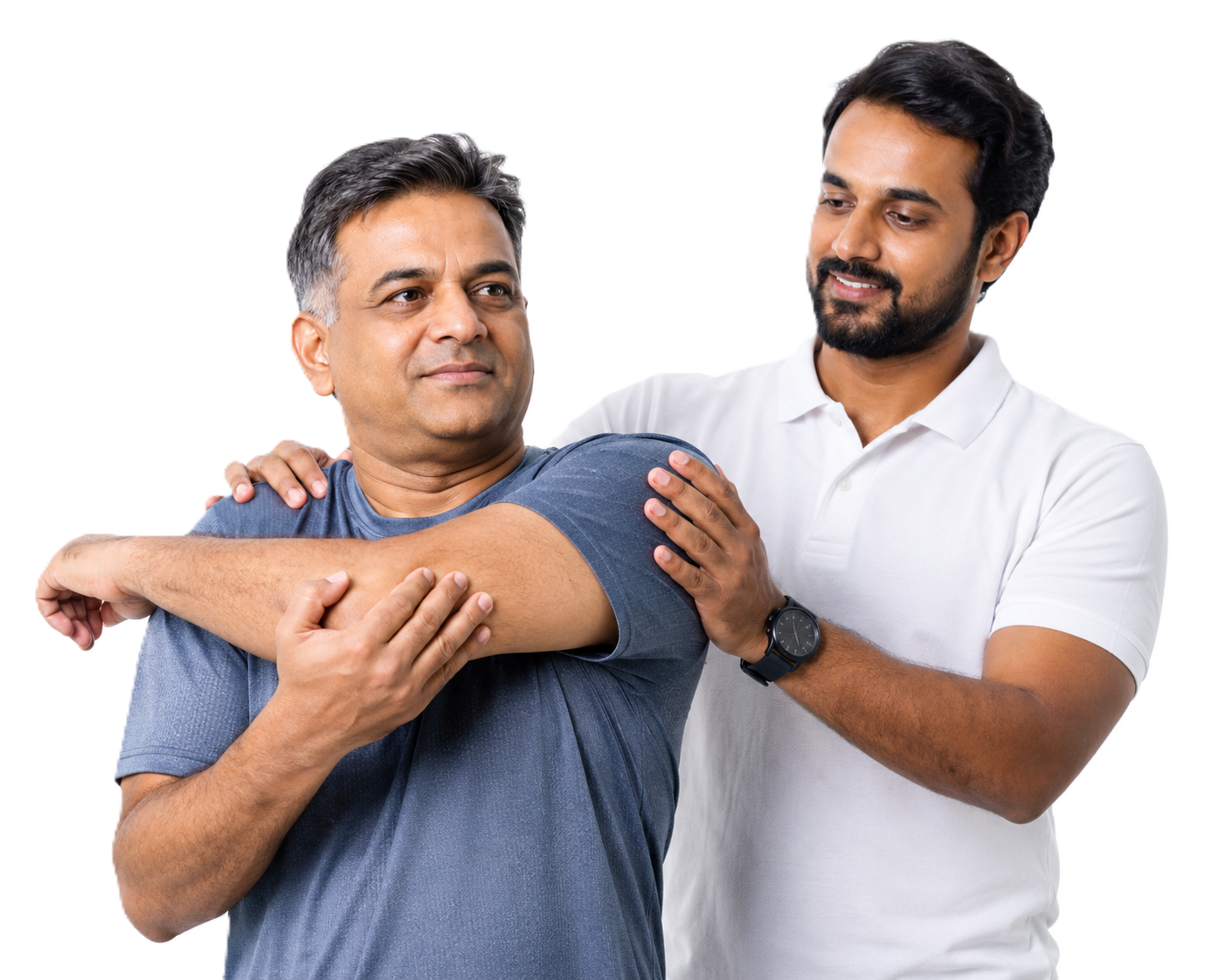
Indian physiotherapist guiding a patient through mobility exercises
People also ask

Before you book Stroke Rehabilitation Physiotherapy

Clear answers to the questions patients most often search before choosing Stroke Rehabilitation Physiotherapy in India.

What is the golden period for stroke recovery through physiotherapy?
The first 3 to 6 months following a stroke represent the primary 'golden period' when brain neuroplasticity is at its highest and motor gains occur most rapidly. However, clinical research proves that structured, task-specific neuro-physiotherapy continues to generate meaningful functional improvements even months or years post-stroke.
How does physiotherapy help stroke patients walk again?
Physiotherapy retrains walking by rebuilding core and pelvic stability, breaking abnormal extension synergies, stimulating ankle dorsiflexion (preventing foot drop), and utilizing body-weight supported treadmills. Over time, repetitive stepping drills stimulate neural pathways to re-learn symmetrical, safe walking.
What can be done for a spastic, clenched hand after a stroke?
Spasticity is treated through sustained slow physiological stretching, air-splint positioning, antagonist extensor muscle activation, and Constraint-Induced Movement Therapy (CIMT). When combined with Functional Electrical Stimulation (FES), patients can often regain functional grasp and release.
How many stroke physiotherapy sessions are required per week?
During the subacute phase, international clinical guidelines recommend intensive rehabilitation of 5 to 6 sessions per week, lasting 45 to 60 minutes each. As independence increases, frequency transitions to maintenance programs of 3 sessions weekly combined with guided home exercises.
Can stroke physiotherapy prevent joint deformities and shoulder pain?
Yes. A frequent complication of hemiplegia is shoulder subluxation (partial dislocation) caused by weak rotator cuff muscles. Our physiotherapists use gentle approximation, therapeutic taping, and neuromuscular electrical stimulation to keep the shoulder joint securely positioned and completely pain-free.
What is the cost of stroke rehabilitation physiotherapy in India, and is it covered by Mediclaim?
Stroke physiotherapy sessions at CurePrabha generally cost between ₹700 and ₹1,600 per session depending on specialized neuro-equipment (FES, gait trainers). Post-hospitalization stroke rehabilitation is covered under many health insurance policies, critical illness plans, and government employee health schemes.
Physiotherapy Care

Trusted care.
Lasting impact.

Stroke Rehabilitation Physiotherapy at CurePrabha Clinics

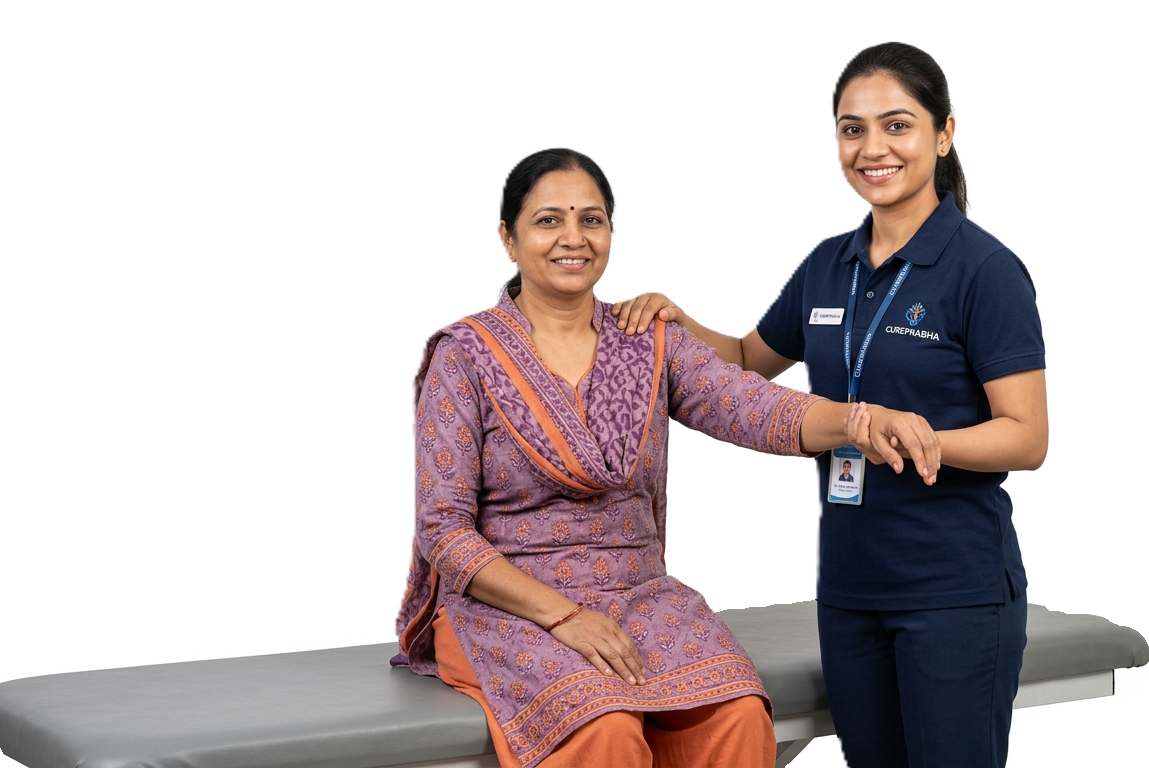
Every patient deserves an environment built around their recovery. Our certified clinical physiotherapists deliver evidence-based care across 120+ cities in India.

Personalized Clinics
Licensed Therapists
Clinic-Based Recovery